

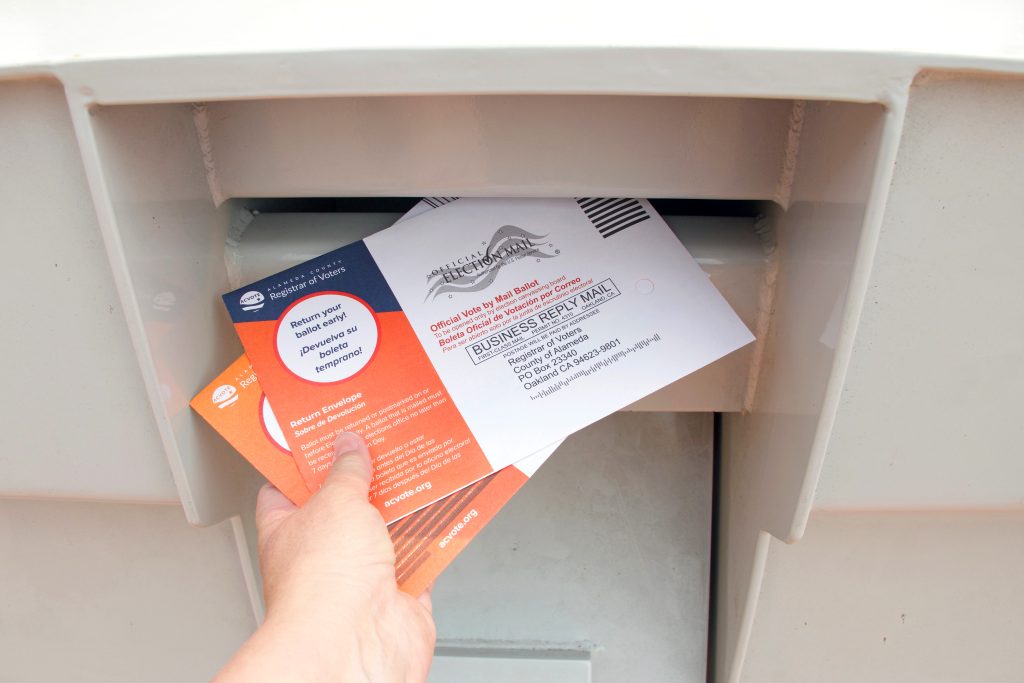
Public Law Update – Tax Measure Amending the California Constitution on the November Ballot
Aug 18, 2026Introduction
As a result of a compromise between Governor Newsom’s office and the proponents for two sweeping tax measures, only one local-tax measure will be on the November 2026 ballot — Proposition 43 (ACA 22). If approved by the voters, it will require a two-thirds vote for citizen-initiated special taxes going forward, effective January 1, 2027, without disturbing taxes voters have already approved. Two more sweeping measures — Initiative 1983 and ACA 13 — were withdrawn in the last-minute deal, and an earlier, broader initiative had already been struck down in court.
This update walks through each piece: what qualified, what was removed, and the negotiations and court ruling that explain why.
The background — why local taxes became a fight
To understand what was pulled and why, it helps to know the underlying dispute.
Under Proposition 13, special taxes generally need a two-thirds vote to pass. But in 2017, California courts ruled that when a tax measure is put on the ballot by citizens through the initiative process — rather than by a city council or other government body — it only needs a simple majority (over 50%). California Cannabis Coal. v. City of Upland (2017) 3 Cal. 5th 924. This allows tax increase proponents to bypass the constitutional two-thirds requirement.
What didn’t make the ballot — and why
A. Initiative 1983 — withdrawn through the negotiated deal
Initiative 1983 (petition 25-0006A1, Local Taxpayer Protection Act to Save Proposition 13), backed by the Howard Jarvis Taxpayers Association, would have been the most far-reaching. It would have:
- Raised the approval threshold for voter-initiated tax measures from a simple majority to two-thirds;
- Applied to all local governments, including charter cities, and barred them — and voters exercising the initiative power — from imposing real property transfer, sales, or documentary taxes above the rate set by Revenue and Taxation Code section 11911 as it existed on January 1, 2025 (the roughly 0.11% state baseline), while also restricting ad valorem and non-ad valorem taxes on real property; and
- Applied retroactively, providing that non-compliant property-related taxes enacted before its effective date would become null and void on December 31 of the second year following enactment — by December 31, 2028, assuming a 2026 effective date.
That retroactive feature is what alarmed local governments — it put already-approved local taxes at risk of being invalidated.
B. ACA 13 — removed as part of the same deal
ACA 13 (Ward), proposed by the Legislature, would have required that any initiative seeking to raise the voter-approval threshold to adopt any state or local measure — not just tax measures — itself pass by that same higher threshold, and it applied to statewide initiatives appearing on the ballot on or after January 1, 2024. The measure, titled the Protect and Retain the Majority Vote Act, also authorized local governing bodies to hold non-binding advisory votes on issues of governance. In practice, its threshold rule meant the Jarvis measure would have needed two-thirds support to pass.
C. The compromise: both pulled, replaced by ACA 22 (now Proposition 43)
Just before the June 25, 2026 deadline for measures to qualify or be removed, the proponents of Initiative 1983, Governor Gavin Newsom, and legislative leaders announced a deal. Under the deal, Initiative 1983 and ACA 13 were both removed from the November ballot, and they were replaced by ACA 22 (Wicks) — now Proposition 43.
If voters approve it by majority vote, (Cal. Const. art XVIII sec. 4), ACA 22 (Proposition 43) would increase the vote threshold for special taxes placed on the ballot by citizens’ initiative from a simple majority to a two-thirds supermajority — but only going forward, starting January 1, 2027. Crucially, it applies prospectively only: local ballot measures approved on or before the November 2026 election are no longer at risk of being invalidated.
ACA 22 (Proposition 43) writes a new Section 4.5 into Article XIII A of the California Constitution (the article Proposition 13 created). The compromise gives each side part of what it wanted. Prop 13 supporters get a higher, constitutionally fixed threshold for future citizen-initiative tax measures; local governments keep the taxes their voters have already approved. Voters now decide only the narrower, forward-looking question rather than the sweeping retroactive one.
The measure reads, in its entirety:
Resolved by the Assembly, the Senate concurring, That the Legislature of the State of California at its 2025–26 Regular Session commencing on the second day of December 2024, two-thirds of the membership of each house concurring, hereby proposes to the people of the State of California, that the Constitution of the State be amended as follows:
That Section 4.5 is added to Article XIIIA thereof, to read:
SEC. 4.5. (a) Beginning on January 1, 2027, and notwithstanding Article II and Article XI, no local government, including the electorate of a local government exercising the initiative power, may impose, extend, or increase any special tax, except as provided in Section 4 of this article, subdivision (d) of Section 2 of Article XIIIC, and paragraph (2) of subdivision (a) of Section 3 of Article XIIID, unless and until that tax is submitted to the electorate and approved by a two-thirds vote.
(b) Notwithstanding Article II and Article XI, no local government, including the electorate of a local government exercising the initiative power, may impose ad valorem taxes on real property, except as provided in paragraph (1) of subdivision (a) of Section 3 of Article XIIID.
(c) “Local government” and “special tax” shall have the same meaning as provided in Section 1 of Article XIIIC.
What to watch going forward
For public agencies, the practical upshot is stability. Assuming Proposition 43 passes, local special taxes and property-related taxes approved by voters on or before November 2026 remain valid as the initiative reaches only measures going forward. Organizers of future citizen initiatives seeking local special taxes would need to clear a two-thirds supermajority rather than a simple majority, and citizen-initiated ad valorem real-property taxes are barred outright — both effective January 1, 2027. Because the measure operates prospectively, timing matters: local tax measures on the November 2026 ballot are still governed by the current majority-vote rule, while later efforts would face the higher threshold if voters adopt Proposition 43. We will continue to monitor the election results and any subsequent litigation or implementing legislation.
All materials have been prepared for general information purposes only to permit you to learn more about our firm, our services and the experience of our attorneys. The information presented is not legal advice, is not to be acted on as such, may not be current and is subject to change without notice.
 LOS ANGELES